China's 15th Five-Year Plan: I Told You So

When Premier Li Qiang unveiled its 15th Five-Year Plan (2026-2030) in march, I found myself reading through it with very little surprise. Almost every major pillar of this plan was something I wrote about in my new book China's Next Miracle whilst Biden was still President. China's long-term masterplan has always been visible for anyone willing to look past the geopolitical noise and the framing by media. The new 5-year plan's new mantra is built around three interlocking pillars: qualitative growth, self-reliance, and security. Each one tells a story the world is still struggling to appreciate.

1. Qualitative Growth: China Has a Plan. Does the US? Does Europe?
For 2026, China targets 4.5–5% GDP growth, which is deliberately slower than before. China explicitely signals that for the next five years, China will shift from high-speed growth to high-value growth. Western media however read this instead as low-speed growth: China is losing economic momentum due the real-estate crisis, local government debts, consumer confidence, deflation, US-China tensions, export controls, market barriers, too low FDI and many more Chinese structural or systemic issues.
Yet, China’s new plan has not explicitely said that “growth will be lower”, but policy now definitively lowers its tolerance for debt-fueled stimuli and over-reliance on real-estate investment. It is also important to recognize that 4-5% GDP growth for a $20 trillion economy is as much as 10% annual GDP growth back 15 years ago. Let’s also remember that 10 years ago, when US economy had the same GDP as China today, its GDP grew at 2-3%.
The new buzzword for the structural reform is "New Quality Productive Forces" (NQPF), a concept I described at length in the second chapter of my book as China's master plan to transition from a labor-intensive economy to a knowledge-based one.
"Xi's master plan is not intended as a solution to China's old problems, but as a new model to enable new growth for a sustainable China and its people. It is not a reactionary plan, but an action-oriented initiative." — China's Next Miracle, p. 110
What makes the next five-year plan remarkable is not its ambition, but its specificity. Where Western governments debate, China acts. The plan addresses the systemic challenges that Western analysts have long predicted would derail China's growth. More so, these challenges are the sparks for structural transformations and reforms:

By Pascal Coppens
Tragically, the US and EU face very similar societal and systemic challenges as China such as an aging population, government debts, housing crises, inflation (instead of deflation), overconsumption (instead of savings), social inequality, unemployments (due to AI), elderly care, healthcare costs, trade and other wars… but the US has no national industrial strategy and the EU has targets but no enforcement. China has both. We might not all believe or trust China’s plan to work, but at least China has a solid plan.
"Ironically, most of the arguments put forward in the West as to why China will never become an innovative global power are also recognized by Beijing as the challenges they need to address. The recommendations for reform made by Western commentators are partly reflected in China's ambitious plan for 2035. The difference lies not in the reforms themselves, but in their purpose: not change for the sake of rectification, but reform as a way to shape the future." — China's Next Miracle, p. 108
2. Self-Reliance: China Is Becoming the Laboratory of the World
The second pillar is where the plan could really shift the global technology landscape and pivot the technological world order from US-led to China-led. The signs are so obvious, but we are blindsided by two US-made daily newsflashes that keeps our attention on the US: AI and Trump. The US is amplifying uncertainty and volatility. China is reinforcing stability and productivity. Blue pill or red pill? Take your pick.
In this five-year plan, China is committing to 7% annual R&D growth, a target of 22 high-impact patents per 10,000 people, and a full "AI Plus" initiative that embeds artificial intelligence across hyperscalers, applications, and industrial ecosystems. The digital economy is targeted to reach 12.5% of GDP. The plan also doubles down on chokepoint technologies like chips, new materials, machine tools, software, and biomanufacturing. These domains are precisely where US export restrictions were supposed to slow China down. As I argued in the book, those restrictions had the opposite effect, and this trend is continuing:
"Those who try to slow China down often only end up increasing their own dependence, as history has already shown." — China's Next Miracle, p. 192
The AI story is particularly striking. When ChatGPT launched in late 2022, Chinese AI researchers openly admitted they were years behind. By early 2025, models like DeepSeek and Qwen had caught up with or surpassed their American counterparts. Early 2026, Kimi 2.5 from Moonshot AI confirmed that the Chinese AI development power was no anomaly, but a trend. During the 15th five year plan, AI was mentioned 52 times, followed by the energy sector (new, renewable, battery, gas, petroleum) 37 times, followed by the aerospace sector (satellite, aerospace, aviation, drones, low-altitude) 36 times, and quantum 10 times. The higher the frequency the higher the importance in the 5-year plan, and AI as ‘technology’ is now key to achieve the plan.

But the most underreported story where the shift is drastic is in the biotechnology sector. In 2026, 60 billion USD worth of license deals were signed between Western big pharma and Chinese medical drug developments. With 46% of all global new drug molecules entering human trials now originating from China and Chinese NMPA achieving approvals twice as fast as US-FDA, it is clear that China has become the world’s laboratory of drug development. And the West is paying to access it!

The 15th Five-Year Plan now institutionalizes this momentum of disruption with other frontier technology targets in quantum computing, embodied AI, brain-computer interfaces, 6G, and aviation. Watch China’s new GDP growth sectors driven by policy plans, strong innovation capabilities and advanced industrial capacity.

3. Security: Energy Is the New Geopolitics
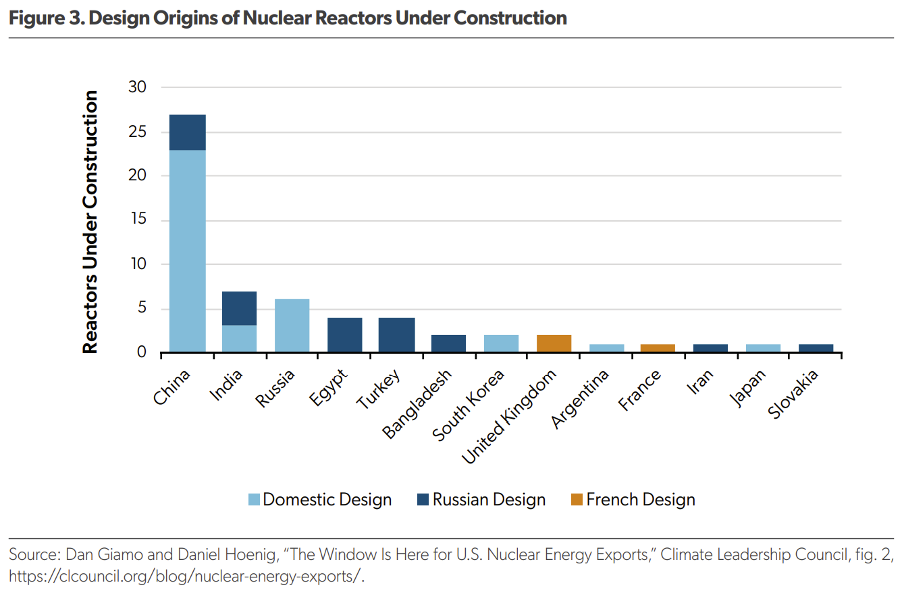
The third pillar is one of the most underestimated in the West: energy security. The war in Iran changed that, as now the whole world woke up to that same reality. China saw this coming over a decade ago, and is continuing its path to far-reaching energy independancy or inter-dependancy. The 15th Five-Year Plan now targets non-fossil fuels at 25% of total energy consumption (up from 21.7% today), a 17% reduction in CO2 per unit of GDP, and continued expansion of EVs, green hydrogen, and next-generation battery technology. It also includes strategic stockpiling of oil and gas — including a new pipeline from Siberia — as a buffer against geopolitical shocks. The upgrading and expansion of Chinese coal-plants has always been viewed at with rejection in the West, but now forms China’s insurance policy in uncertain times like today. And the results are now visible. In 2025, China added 540 GW of new power capacity, that is eight times more than the United States. Over 430 GW of that came from wind and solar alone. Every year, China brings 7 to 8 nuclear reactors online, at twice the speed of France or US per new plant.
"China's approach to sustainability wasn't driven by moral conviction, international agreements, or a desire for greater transparency, but by the motivation to combat heavy pollution, strive for energy independence, and leverage the scale of its production machinery to become the green factory of the world." — China's Next Miracle, p. 160
The consequence of China’s massive renewable capacity build-up is 21 consecutive months of flat or declining CO2 emissions, which is a historic first for the world's largest emitter. The oil-crisis in the middle-east did not expose China’s energy vulnerability, but it did expose everyone else’s...and over time China’s energy strategy will quietly become the world's most envied.
"Europe waxed poetic about its grand visions for climate transition, while China quietly worked toward tangible results. Not always clean, rarely transparent, but always focused on their goals." — China's Next Miracle, p. 160
The energy story is also the AI story. As I noted in last month's newsletter, tokens are the new oil; and the ability to generate them cheaply at scale is directly tied to energy capacity. China's 3x energy capacity advantage over the US is not just an environmental story. It is a competitive moat that will define the next decade of AI deployment and technological leadership. The US might for now still have more advanced chips, but without energy to run them, it’s like having the fastest cars, but no oil to keep them running.
If we want to understand China’s technological advancements, we need to look at what fuels the engine, not only compare who has the best or fastest engine.
"Think of China like you would think about Texas or the Gulf States: as a supplier of a vital raw material. For the latter, that's oil; for China, it's technological innovation coupled with industrial strength." — China's Next Miracle, p. 105


Comments